Our Duty In A World Of Betrayal

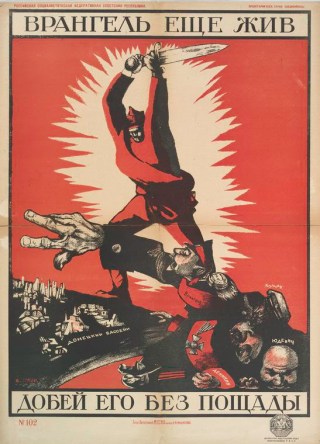
It is the duty of the revolution to put an end to compromise, and to put an end to compromise means taking the path of socialist revolution.
-Lenin, Speech On The Agrarian Question November 14 (1917)

7-3
From El Gran Capitan


Torts is the law of damages. It is the godmother of one of the most popular characters in the legal realm: the greedy, unethical personal injury lawyer. Chasing ambulances from dawn to dusk, ready to turn your scraped knee into a traumatic, devastating injury through all the smoke and mirrors the cold, impersonal legal system provides. Like many mythical figures, it derives from a real phenomenon. I once interviewed at a law firm for a paralegal position where one of the two partners pretty closely resembled this character, at least by what assessment I could make in thirty minutes. He all but asked me how good at lying I was and whether I could “handle” clients. But overall, as the film Hot Coffee aptly demonstrates, personal injury lawyers are not like this stereotype and personal injury cases are rarely if ever as easy to dismiss (though again, there are exceptions: for a laugh, check out the case Van Camp v. McAfoos).

Continue reading

The End of Dodd-Frank Part 3: The Chilling Effect of Capitalism on Stability in the Congo

lumumba-colonialists-e1422029833605The third part of this series on the Dodd-Frank Act is the most unusual because, at first, it seems to have nothing to do with finance at all. Instead it comes down to a trial about the First Amendment in 2015. Let’s give some background:

Coltan is short for Columbite-tantalite – a black tar-like mineral found in major quantities in the Congo. The Congo possesses 64 percent of the world’s coltan. When coltan is refined it becomes a heat resistant powder that can hold a high electric charge. The properties of refined coltan is a vital element in creating devices that store energy or capacitors, which are used in everything from the smart phone you may be using to read this to the laptop I am using to write it.

Continue reading

Coming Up On Habeas Quaestus

Hello comrades, friends, and readers!

With over 2000 views, this blog has gotten bigger than I anticipated and that is largely from many of you sharing it on Facebook, Reddit, and Twitter so thank you for that! For the first time in my life I stumbled on a conversation where my work was being referenced and it was really special. I’ve also gotten lots of donations which is incredibly flattering and has kept the lights on in my 6.5 x 20 foot room (NYC amirite?).

Those who know me IRL know that I’m doing finals right now and then immediately starting my summer employment a few days after (because I despise down time, which my therapist says is very “not Marxist” of me). I’m going to be super busy this summer with some family and personal stuff, National Lawyers Guild stuff, and lots of pieces for this blog! Let me give you some previews:

– I know some of y’all probably thought it wasn’t going to happen, but I do plan on wrapping up both my series on Dodd-Frank and my series on prison abolition. Aside from my response to Dean Spade, these have been my most popular pieces and I am really excited by the interest in both, and hope that some of these facts can make their way into the various campaigns and movements around these issues.

– I am going to write a piece comparing and contrasting the US legal definition of what emotional harms are considered valid versus socio-political concepts like trigger warnings and post-traumatic stress disorder.
– I’ve got a piece in the works on duty. There will be lots of shameless Lenin fangirling.
– There are a few CFPB rules currently in the pipeline, and the two I am most interested in are on payday loans and mandatory arbitration clauses. If you just can’t wait for my take on these, I highly recommend checking out New Economy Project and #StopTheDebtTrap

Also if you want me to write on anything, feel free to ask!

For Trans Women Considering Law School

6151084971_5caa0238a9_z

I often get asked by people, mostly other trans women, about law school: what it is like for me and whether they should enroll. When it is a trans woman, I always ask, “Have you read Dean Spade’s For Those Considering Law School?” Usually they have, a combination of affirmation at knowing this piece of radical text and anxiety at its implications plays on their face as they begin to list off what they believe are the truisms of the piece.

At this point I usually interrupt: “Ignore it. Ignore all of it. Especially for you, especially for our community, completely ignore it. Deciding to go to law school is an incredibly difficult decision informed by criminal records, debt, pathways to providing for your family (biological or chosen), and professionalism. And Dean Spade’s piece does not help navigate any of it.”

Continue reading

Unacceptable Outcomes: An Ode To Elizabeth Warren

lol red rosa stahp
Elizabeth Warren sending Habeas Quaestus’s author on  her first assignment. But seriously read Red Rosa.

People hate that I love Senator Elizabeth Warren. Which at first glance may seem surprising: after all, Warren is beloved by a large portion of the Left and even some people outside of it. But it isn’t her that’s the problem: it’s me. My liberal friends hate that I share her videos yet constantly chide and push them to be far more radical than the views she expresses. My radical friends hate that I defend her decision to not endorse Bernie Sanders, her decision to not run for president, and even her decision to be a Senator. Her sharp style of argumentation and rational, no-nonsense demeanor makes her an ideal populist candidate for a country fed up with big finance. But her and I both know that, at least at this point, she does more good as a Senator.

Continue reading

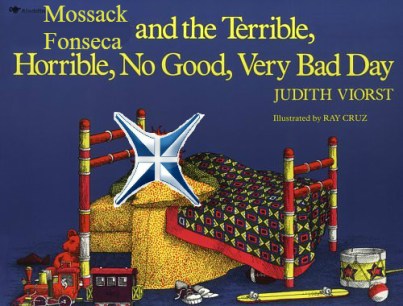
Mossack Fonseca and the Terrible, Horrible, No Good, Very Bad Day

mossack fonseca

“A blind domination founded on slavery is not economically speaking worthwhile for the bourgeoisie of the mother country. The monopolistic group within this bourgeoisie does not support a government whose policy is solely that of the sword. What the factoryowners and finance magnates of the mother country expect from their government is not that it should decimate the colonial peoples, but that it should safeguard with the help of economic conventions their own “legitimate interests.”” – Frantz Fanon, The Wretched of the Earth

“I did a lot of infrastructure development in my life. To fund them with foreign currency is madness. OK? Madness.” – Tidjane Thiam, CEO of Credit Suisse

Jürgen Mossack has had a good run. While Mossack and the firm he co-founded, Mossack Fonseca, will deny the illegality of their actions until the bitter end, it really does not matter. Their purpose, their utility to some of the most powerful and wealthy people of the world, was to keep their information and the information of their clients in the shadows. To not just protect capital from the oversight and taxes of the various applicable governments, but to protect these safe havens from scrutiny. While many of these accounts or the funds within them were illegal, what really matters here is that the capital has been exposed, and with that exposure it will be expected to re-enter various cycles of accumulation and consumption. The jig is up.

Continue reading

The Honorable Market Garland

Hillary-Clinton-Merrick-Garland-Screen-Shots-MSNBC-3-16-2016-e1458154807430With the death of bigot and child death penalty advocate Justice Scalia, President Obama set upon his constitutional obligation to appoint a new Justice to the Supreme Court. A number of people of color legal all-stars were discussed as likely candidates, and as late as early this morning a connection of mine in the White House said it looked like Sri Srinivasan was going to get it. That build up probably contributed considerably to how disappointed the Progressives of the Democratic Party are at the nomination of Judge Merrick Garland. With the nomination of Merrick Garland, the Obama administration and Democratic establishment have doubled down on upholding neoliberalism as the core of the party’s politics. The legal punditry must break free of the misleading categories that have long dominated our analysis, especially of the Supreme Court. Pro or anti-government; progressive or textualist; and activist or conservative all are false binaries and obfuscate the truth. Judge Garland in particular reveals a truth that the marginalized people of this country have known for centuries: the law is construed to fit the politics of the powerful.

Continue reading

Prison Abolition Part 2: Bye Bye Broken Windows?

Part 1 of the Prison Abolition series.

Little_Shop_Of_Horrors_PicA recent event has led me to make a major change to the series, replacing the section on alternatives to incarceration with a discussion on broken windows. That event is the decision by Manhattan District Attorney Cyrus Vance declaring that his office would no longer prosecute so-called “quality of life” crimes. His office is downplaying how this does or does not fit into the standing NYPD policy of the past two decades (begun by Bill Bratton during his first tenure as Chief). But Ed Mullins, president of the Sergeants’ Benevolent Association, is a bit more upfront: “They are now sending a message that minor offenses are no longer important to address as quality of life issues in New York City. This must be the new version of Bratton 2.0. This totally contradicts everything he has preached, philosophized and lectured about across the nation. Now, these offenses are no different than parking tickets.” Bratton himself remains fairly silent and minimally supportive on the issue. Now to be clear, as noted by Mullins, these offenses are not going away completely, but are merely being reduced to violations where you get a ticket.

Continue reading

Prison Abolition Part 1: The Serial Killer Question

This is Part 1 of my series on prison abolition.

4023670698_5e66732810_z

As I have addressed previously, despite what TV shows and movies might try to show you, serial killers are generally not at risk of “getting off” on an insanity defense. They usually wind up in prison, and get sentences that are expressly or by nature life sentences.

Serial killers scare and fascinate us. There are not only shows about serial killers like Dexter and, my personal favorite, Deadly Women, serial killers often pop up as a plot in crime shows or even as a plot twist in shows not about crime at all. But if you’ve ever watched a documentary or psychological analysis of serial killers, you know that our actual knowledge of why serial killers are serial killers is pretty sparse. And even among experts the conclusions reached are often tainted when bias begins at the very methodology of study. It is of course difficult to not have feelings about serial killers. Many of them target the most marginalized people in our society – sex workers, queer youth, Indigenous women, Black women, the mentally ill, etc. Killings are often paired with grotesque acts of sexual violence, cannibalism, and torture. The killings can be so brutal as to leave experienced police officers shaken.

While we do not understand serial killers, they represent the ultimate imbalance between prioritizing punishment over rehabilitation. We are told sociopaths do not change. They were either naturally this way or so constantly barraged by trauma in childhood as to be beyond “saving.” They either need to be locked away forever or murdered themselves by the State.

My argument is two-pronged: (1) is the evidence on serial killers being irredeemable accurate? (2) even if it is accurate, is incarceration still the best solution?

A quick scan of the literature on sociopathy turns up a lot of pop-science articles that are really more about asshole boyfriends than actual sociopaths. What is a sociopath? Well, perhaps non-existent. After all, the Diagnostic and Statistical Manual V, the Bible of psychiatry, does not have clinical definitions of psychopathy or sociopathy. Rather, their classifications are of personality disorders, particularly antisocial personality disorder, avoidant personality disorder, borderline personality disorder, narcissistic personality disorder, obsessive-compulsive personality disorder, and schizotypal personality disorder.

While these differ in various ways, the DSM V also specifies the following as general personality disorder traits: (1) Significant impairments in self (identity or self-direction) and interpersonal (empathy or intimacy) functioning. (2) One or more pathological personality trait domains or trait facets. (3) The impairments in personality functioning and the individual‟s personality trait expression are relatively stable across time and consistent across situations. (4) The impairments in personality functioning and the individual‟s personality trait expression are not better understood as normative for the individual‟s developmental stage or sociocultural environment. (5) The impairments in personality functioning and the individual‟s personality trait expression are not solely due to the direct physiological effects of a substance (e.g., a drug of abuse, medication) or a general medical condition (e.g., severe head trauma).

I know I probably have readers who are not keen on the DSM V, but it is important to understand the psychiatric definition of personality disorder because it is, at its best, a perspective outside of the criminal justice system focused on care rather punishment and, at its worst, a reminder that mental health treatment, such as involuntary commitment, mirrors incarceration. Personality disorders can be treated both medically and non-medically. Medically, people with personality disorders are often prescribed with antipsychotic agents or mood stabilizers. Non-medically, people with personality disorders are given incentives to shape their behavior to social expectations rather than their own. A key recognition here is that people with personality disorders do not respond to punishment as an agent of personal change. But of course, the purpose of incarcerating serial killers is not to rehabilitate but to punish and to protect society. It is precisely that dynamic that is out of line with both medical and non-medical treatments of personality disorders. 1 in 25 people have a personality disorder, and we know that 1 in 25 people are not serial killers. Further, we know that personality disorders have been on the rise, meaning that it is not statically coded into our genetics but at the very least an epigenetic, if not sociological, phenomenon.

Serial killers do not kill purely by having a personality disorder, and to say so stigmatizes people with personality disorders and glosses over the fact that people with mental disorders or illnesses are far more likely to be a victim of violence than to commit violence themselves. There isn’t an easy answer for what it is that pushes someone with a personality disorder into the realm of serial killer. And arguably, many of the worst killers of the world did not even have personality disorders if we include every military general, every company that stoked conflict to make profits, and other socially sanctioned forms of mass murder. I believe that no one should be given up on to have a meaningful life in their community, and much of the real scientific literature backs me up.

And even if there are these mythical people with personality disorders who are just predestined to try to mass murder and can never be changed or steered away from that purpose, we still do not benefit as a society from incarcerating them. Incarceration is a reactionary, punitive strategy – to at best prevent further problems. Incarceration does not prevent violence effectively, whether violence from a domestic dispute or from a serial killer. Rather, what will prevent killings by serial killers is substantive and objective research into how to pinpoint people at risk and intervene. There are some programs for this purpose, but they are poorly funded and usually within institutions with agendas outside of helping those with personality disorders (i.e. schools want to maintain order and conformity, the military wants to maintain its strength, etc.). And speaking of the military, we must end institutions that by their nature provide serial killers to be with the access to training and weaponry. Gerard John Schaefer, Jr. is the most obvious example of this, a police officer who used his impunity to kill ~30 girls and women. But the largest by far is the weapons industry. The constitutional focus of Second Amendment rights on the individual often leaves out of the conversation that the weapons industry literally profits off of murder. Particularly the lack of restrictions on ammo production, rather than ammo ownership, ensures that access to ammo is never a problem for someone who wants to commit a mass shooting.

This post is a bit different than most of mine: little legal analysis, mostly socio-political and psychological analysis. But it is no less topics of legal concern. The current laws of the United States are woefully out of touch with current empirical and scientific thought, and the focus on incarcerating people with personality disorders is just one example of this. We must stop accepting that the law is a system unto itself not bound to rationale’s outside of stare decisis. And with Justice Scalia in the grave, now might be the time to begin to push for such changes broadly.

Part 2: Bye Bye Broken Windows?
Prison Abolition: A Six Part Series On Legal Questions And Possibilities

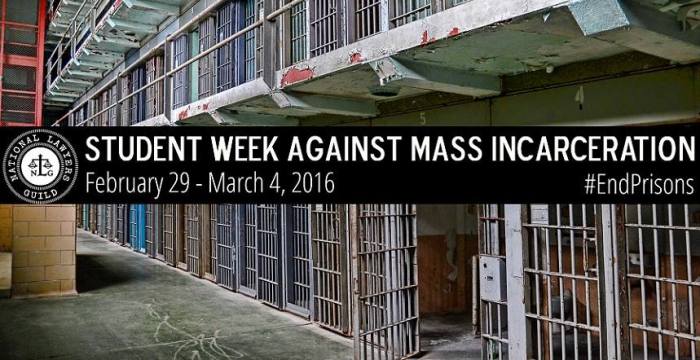
12646963_930840916963435_8458962607186396439_nThis week, 02/29 – 03/04, is the National Lawyers Guild’s Week to End Mass Incarceration. It is part of a shift for the Guild, since NLG passed a resolution last year supporting prison abolition.

First, this series is not going to be completely inline with this resolution. Particularly my own vision of prison abolition, while aiming for an ideal world without cages, I differentiate incarceration and detention. Incarceration is punitive or allegedly rehabilitative deprivation of freedom. Even in the case of the picturesque prisons of Norway, which look nicer than any apartment I’ve lived in these past years in New York City, the wardens are very clear that the relative freedom they have is still very much limited, and that they believe withholding freedom is rehabilitative. I do not agree, and my prison abolition views are centered in this disagreement which I will outline at length.

But while I do not think deprivation of freedom is beneficial to the person, I do think that it is sometimes necessary as an intermediary measure with the current material conditions of the world. While the hysteria of safety used in carceral propaganda is obviously blown well out of proportion, it would be disastrous to open every holding facility in the world right now and let everyone go without the infrastructure to handle it. Further, in a multitude of situations, detention is immediately necessary to prevent violence. I do not believe that people should have to so drastically give up their safety to fight for prison abolition. I did not always think this way: a couple of years ago, I would have called these views limited, reformist, and violent for essentially making a “trade” of the value of life a person detained versus those lives preserved by their detention. However, that was before I had worked for years and been friends for years with people currently or formerly incarcerated. While most of them thought the current system was sadistic and unproductive, the thought of absolute prison abolition was almost as bad. It would be one thing if they were telling me that other people they knew needed to be in there – that could be written off as a product of the Hunger Games mindset that incarceration instills. Rather, it was the number of people who described how incarceration had not so much benefited them as prevented their downward spiral from hurting others. While incarceration is hardly beneficial for communities overall, detention can stop the escalation of violence when done so with that goal in mind.

And that is my major differentiation between incarceration and detention. Incarceration is meant to be violent for the sake of its violence, even in its Scandinavian hippy forms. While I echo Lenin’s sentiment that state action will always be, to a certain degree, violent and coercive, I also share his view that it is necessary for the exploited and oppressed people of the world to seize this state power in the transition between the current capitalist power structure and a future world of real communal democracy. I see detention as the last resort, a final tool to be triggered when anti-violence and prevention methods have failed. It really would be no different than the de-escalation I have done at community gatherings: isolating the person on the verge of or engaging in violence from the people or situation that is facilitating the rise in tension, and if necessary have them leave (I am against permanent bans, but sometimes a person should just take a break).

I think the biggest flaw with “community policing” is that it is an add-on: they police, and on the side they engage with the community. As soon as you’re profiled as a criminal, which can be for as little as being young and Black on the wrong street at the wrong time, the community engagement stops and the policing begins. In a society transitioning to prison abolition, laws are enforced for the good of all people rather than for those who are complacent and conforming. We would try to stop people from committing violence not only for the harm it will cause to others, but the harm it will cause to themselves: damaging their psyche and relationships with others. Detention unfortunately would probably have to be a part of that.

Part 1 of this series will be on the snarky question that many prison abolitionists have gotten – but what about serial killers? Part 2 will highlight alternatives to incarceration: which ones are changing the game and which ones are wielding the very same principles as the prisons they replace.EDIT: because of DA Vance’s recent decision, I decided to write a post on Broken Windows instead. Part 3 of this series will explore how sexual violence would be dealt with in a prison abolition framework, and whether victim-centered responses to sexual violence are compatible with abolition. Part 4 will talk about the Thirteenth Amendment and immediate, constitutional strategies for chipping away at its prison provision. Part 5 will be on those we would actually probably enjoy seeing go to prison, like neo-Nazis or ultra-wealthy bankers, and how we must temper the fury of our quest for justice with radical forgiveness. Part 6 will be on a Marxist conception of prison abolition, and how guilt is a market force even when imposed by the state.